728x90

In clinical research, CRA and CRC roles are foundational and require a strong set of soft skills to ensure smooth, effective operations. Here are some key soft skills that CRAs and CRCs can benefit from:

1. Communication Skills
- Clear, professional communication is vital for both CRAs and CRCs, as they interact with sponsors, site staff, and patients.
- CRA: Must convey study protocol requirements and monitoring findings effectively to maintain compliance.
- CRC: Communicates with patients and site staff to ensure smooth coordination of daily operations.
2. Attention to Detail
- Both roles require a meticulous eye for accuracy to ensure data integrity and regulatory compliance.
- CRA: Monitors site records for errors, omissions, or inconsistencies.
- CRC: Ensures accuracy in data entry and patient records, supporting high-quality data collection.
3. Adaptability
- The clinical research landscape constantly evolves with new protocols, regulations, and unexpected challenges.
- CRA and CRC: Must quickly adapt to changing circumstances, such as updates in study procedures or new regulatory requirements.
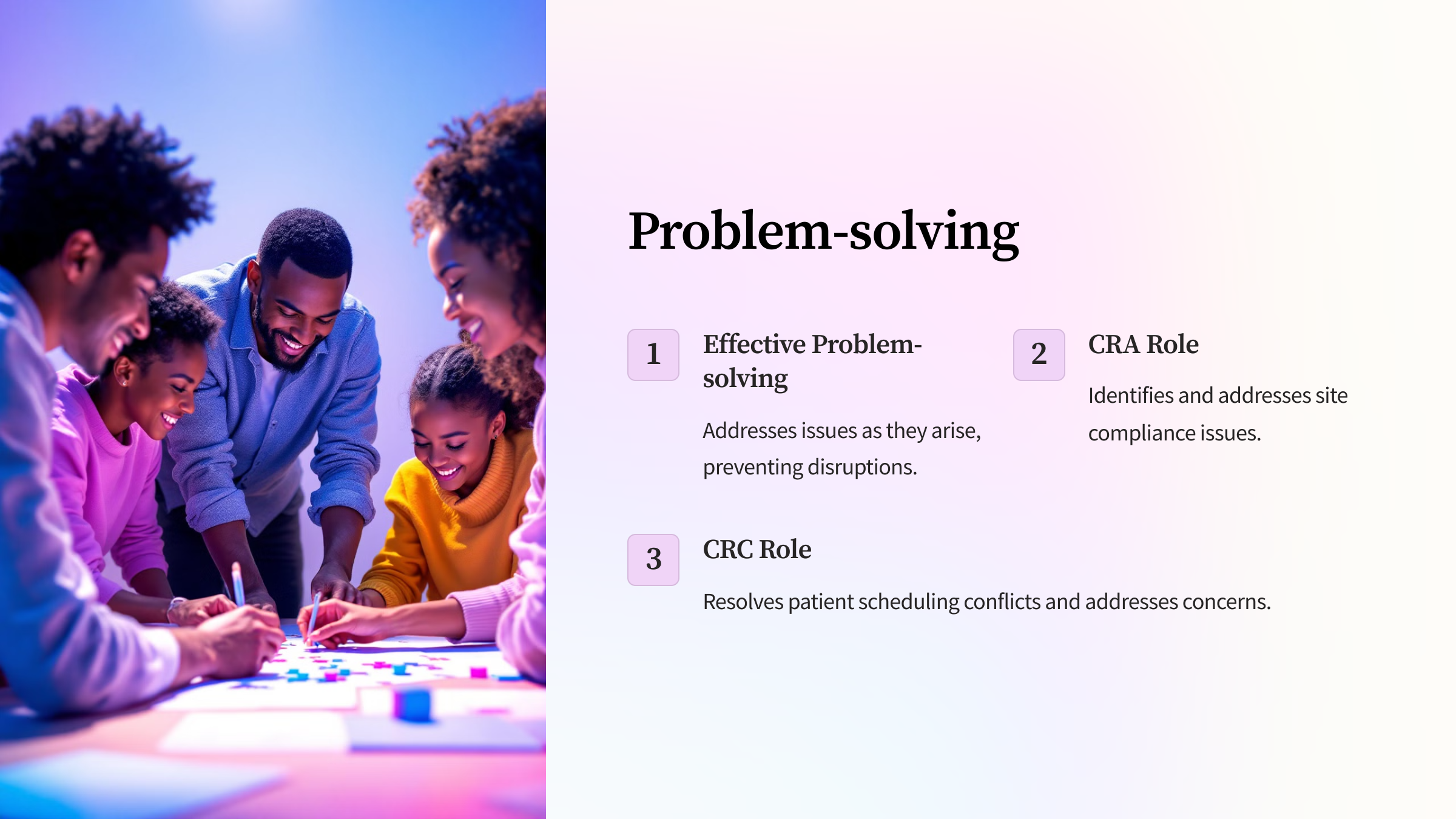
4. Problem-solving
- Effective problem-solving allows CRAs and CRCs to address issues as they arise, preventing disruptions.
- CRA: Identifies and addresses site compliance issues, offering solutions to mitigate protocol deviations.
- CRC: Resolves patient scheduling conflicts, coordinates logistics, and addresses patient concerns.
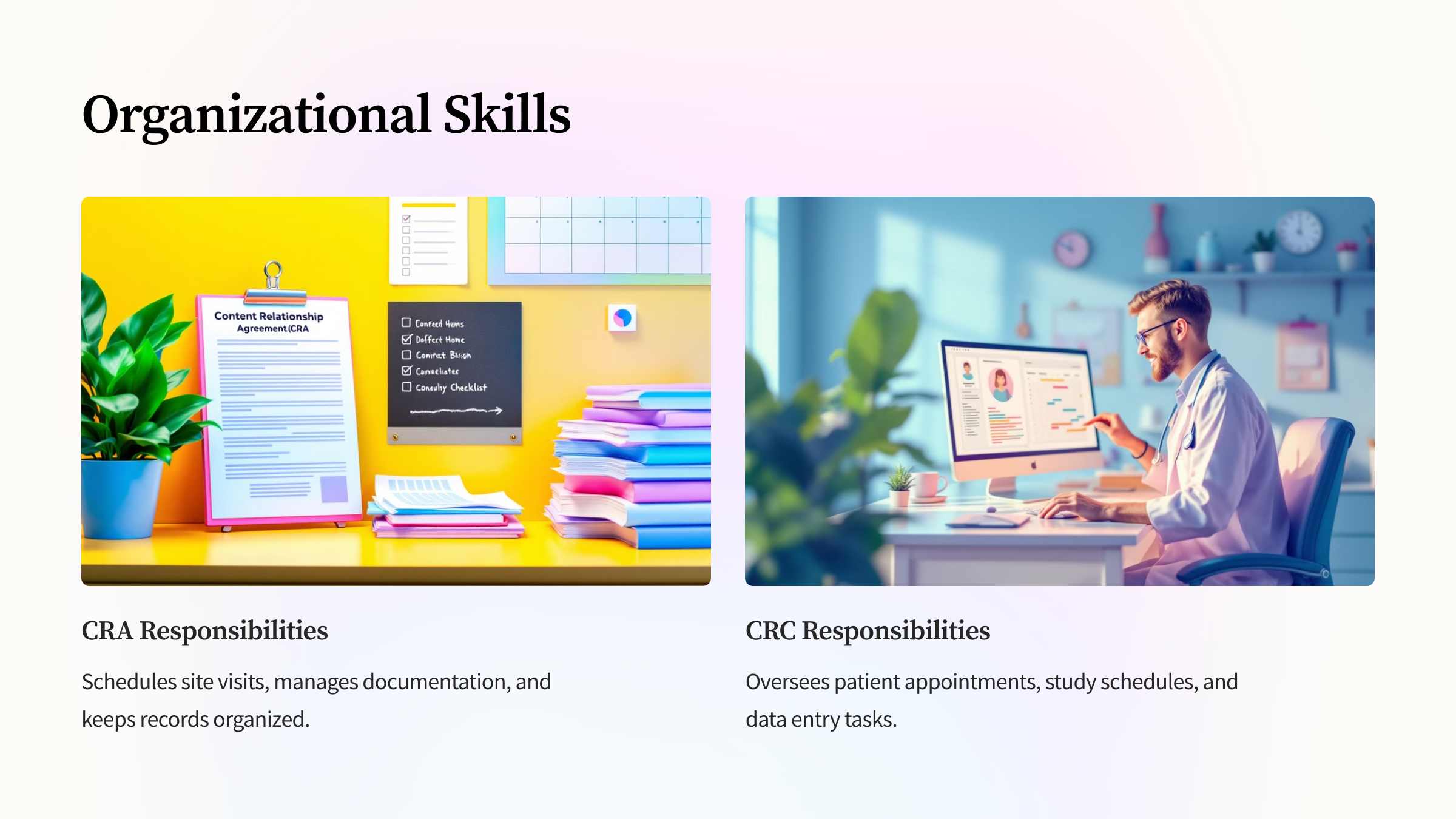
5. Organizational Skills
- Managing multiple tasks efficiently is essential for both CRAs and CRCs.
- CRA: Schedules site visits, manages documentation, and keeps records organized.
- CRC: Oversees patient appointments, study schedules, and data entry tasks.

6. Empathy and Patient-focused Mindset
- Understanding and prioritizing patient needs contributes to participant retention and overall trial success.
- CRA: While not directly patient-facing, being patient-centered helps in promoting participant well-being through site interactions.
- CRC: Works directly with patients, building trust, easing concerns, and ensuring a positive experience.
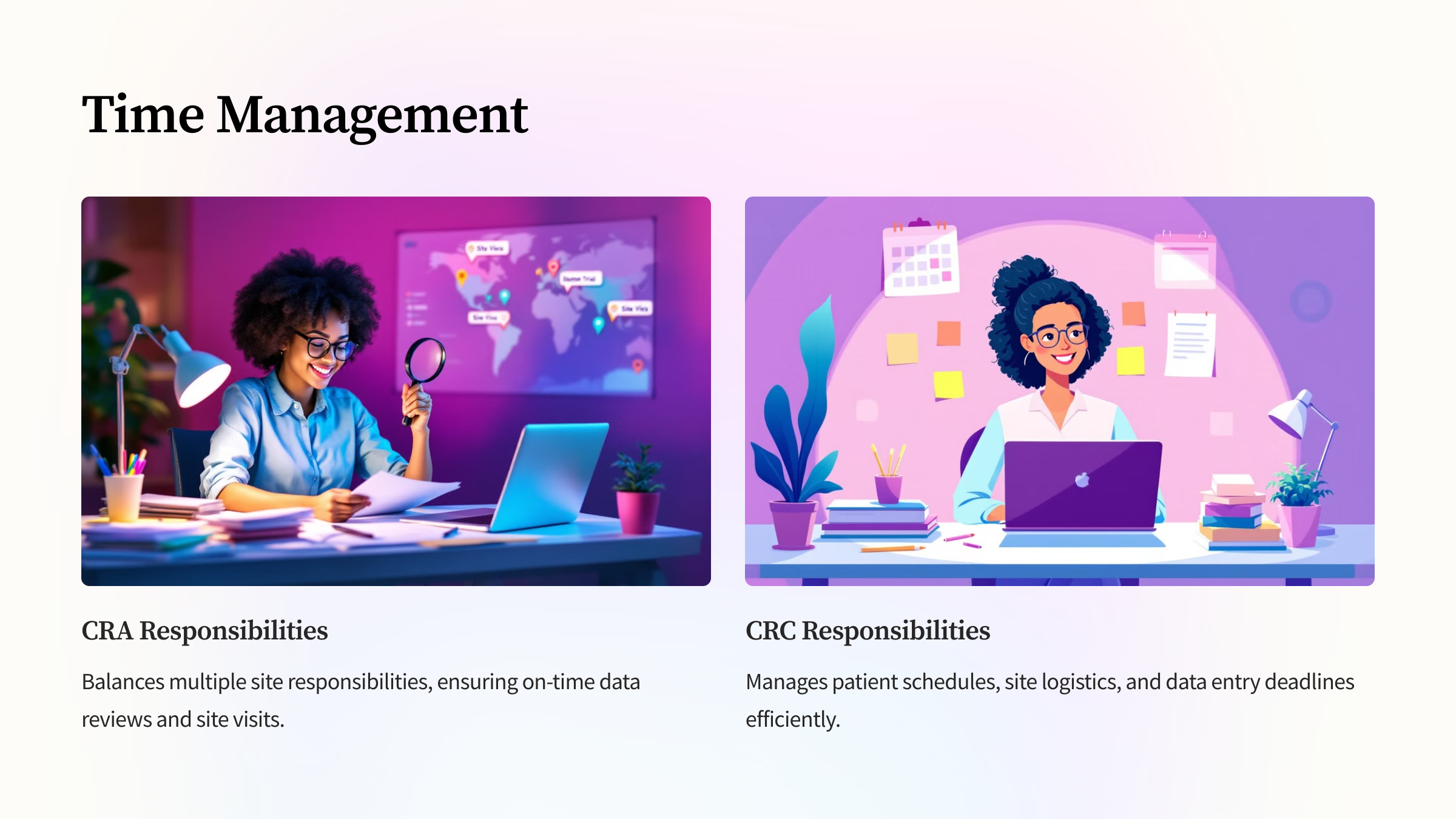
7. Time Management
- Efficient time management enables both roles to keep up with study timelines and reporting requirements.
- CRA: Balances multiple site responsibilities, ensuring on-time data reviews and site visits.
- CRC: Manages patient schedules, site logistics, and data entry deadlines efficiently.
8. Interpersonal Skills
- Strong interpersonal skills are key to building positive relationships with colleagues, sponsors, and site staff.
- CRA: Develops rapport with site staff to facilitate smooth monitoring processes.
- CRC: Works collaboratively with PIs, patients, and clinical staff to create a cohesive working environment.

9. Conflict Resolution
- Both roles may encounter conflicts or misunderstandings that require a diplomatic approach.
- CRA: Mediates and addresses protocol compliance issues with site staff in a constructive manner.
- CRC: Resolves any participant concerns professionally, ensuring minimal disruptions to the study.

10. Professional Integrity
- Integrity is crucial in upholding ethical standards and regulatory requirements.
- CRA and CRC: Must adhere to Good Clinical Practice (GCP) guidelines, maintaining honesty and accountability in all aspects of trial conduct.
These soft skills enable CRAs and CRCs to excel in their roles by fostering effective communication, collaboration, and adaptability, all essential for the success of clinical trials.

728x90