Hello! Today, let's dive into Phase 3 clinical trials, a crucial stage in medical research. Clinical trials are conducted to verify the efficacy and safety of new drugs or therapies. Today, we'll focus on the process and importance of Phase 3 clinical trials. Curious about how clinical trials are conducted? Let's find out together!
Understanding Phase 3 Clinical Trials
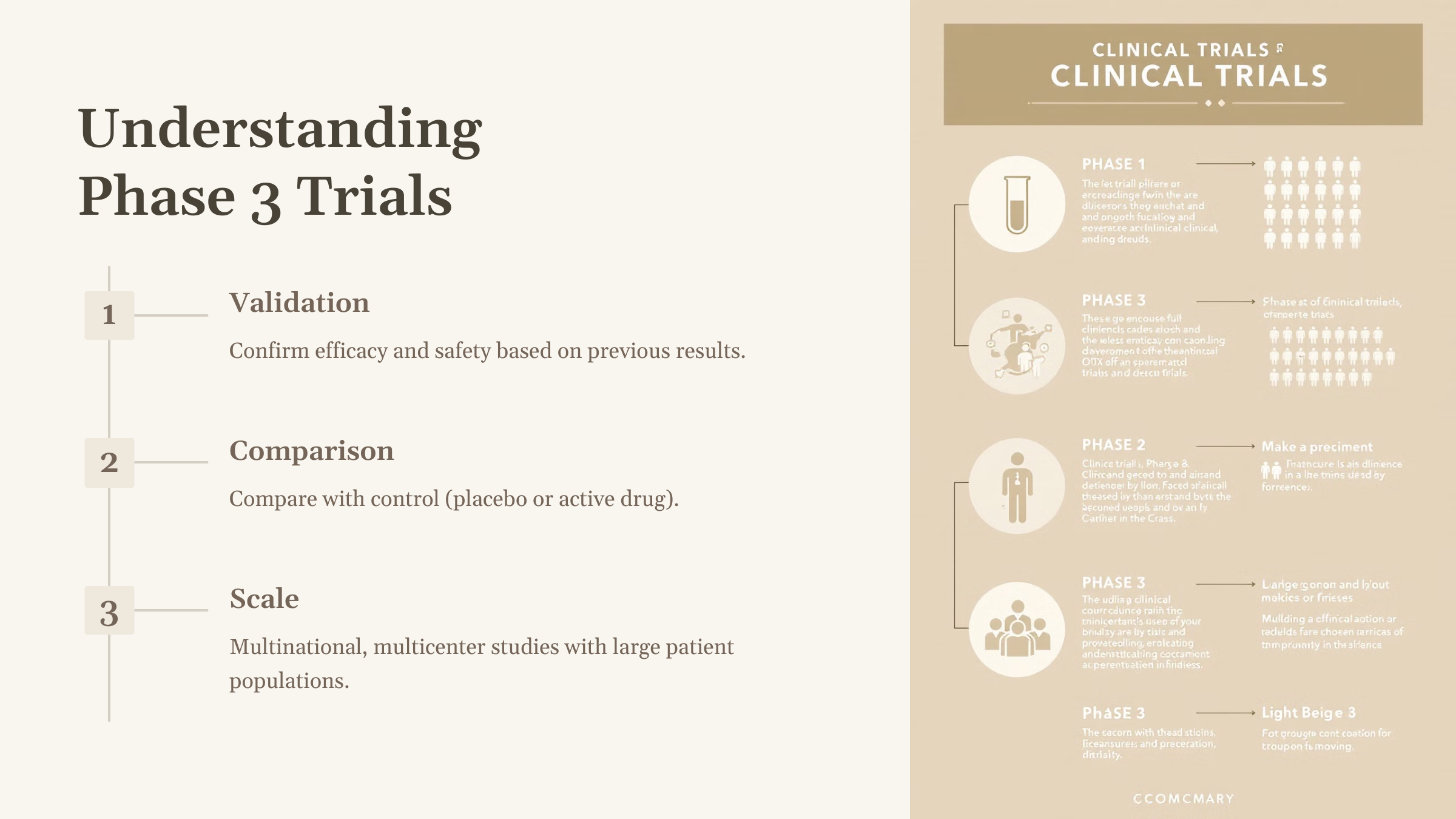
Phase 3 clinical trials are one of the most critical stages in drug development. These trials aim to validate the efficacy and safety of new drugs or treatments based on previous trial results. This phase involves larger patient populations to gather more conclusive data on efficacy and side effects. Phase 3 trials confirm the effectiveness of the drug by comparing it with a control (placebo or active drug) and provide data to establish its labeling information for market use. Due to the large number of participants, these trials are often conducted as multinational, multicenter studies.
Planning and Designing Clinical Trials
For a clinical trial to succeed, meticulous planning and design are essential. This stage involves setting objectives and hypotheses and designing the study in detail. Key elements such as participant selection criteria, recruitment process, trial duration, and schedule are also determined. Proper planning and design are critical as they impact the trial's progression and data interpretation.
During this stage, researchers consolidate knowledge gained from preclinical and earlier clinical phases (Phase 1 and Phase 2) to structure and conduct the trial and statistically validate the effectiveness of the investigational drug.
Types of Phase 3 Clinical Trials
- Pivotal Study: The core study required for drug approval.
- Long-Term Study: A study that continues over an extended period compared to other phases.
- Additional Study for Regimen: Evaluates the efficacy when combined with other drugs.
Study Design
- Double-Blind Active Drug (or Placebo)-Controlled Study: Primarily uses active drug control, with placebo control as supplementary.
Participant Selection and Recruitment
In Phase 3 trials, suitable participants are recruited based on predefined criteria. For instance, patients with specific conditions or within certain age groups might be selected. Recruitment can occur through medical institutions, research centers, or online platforms.

Trial Procedures and Data Collection
Phase 3 trials proceed through several stages. Participants receive the drug, and researchers monitor for effects and side effects over a set period. Data is collected through blood tests, biomarker monitoring, and surveys, and it plays a crucial role in finalizing the labeling information needed for actual market use.
Safety Evaluation: Monitoring for Adverse Effects
In addition to efficacy, safety is a vital component of clinical trials. Continuous monitoring of participants’ health status helps confirm drug safety. If adverse effects occur, swift action must be taken to protect participants.
Efficacy Evaluation: Key Outcome Measures
To evaluate the drug's effectiveness, key outcome measures are used, such as symptom improvement or survival rates for specific conditions. These measures are established during the trial design phase and are critical for accurate result interpretation.
Data Analysis and Result Interpretation
Data collected from the trial undergoes statistical analysis to derive meaningful results. Using statistical tools and methods ensures reliability in the conclusions drawn, and results are interpreted according to predefined criteria, helping assess the overall efficacy and safety of the drug.
Regulatory Submission and Approval Process
Upon completion of Phase 3 trials, results are submitted to regulatory authorities for approval. Detailed reports, along with collected data, analysis results, and safety and efficacy assessments, are reviewed by authorities, who then decide on approval.
Pre-Market Preparation
After successful completion and approval of the Phase 3 trial, plans for market launch are developed. Marketing strategies, production, and financial plans are essential for market entry. Effective marketing and promotional strategies are also necessary to enhance market competitiveness.
Challenges and Future of Phase 3 Clinical Trials
Phase 3 trials come with various challenges, such as participant recruitment difficulties and potential side effects. The long duration and high costs are also significant challenges. However, with advancements in drug development, clinical trial efficiency is expected to improve. Technologies like artificial intelligence and big data analytics may enable faster and more accurate trial processes and result interpretation in the future.
In summary, Phase 3 clinical trials are pivotal in drug development. Many professionals, including CRAs (Clinical Research Associates), CRMs (Clinical Research Managers), CMOs (Chief Medical Officers), STATs (Statisticians), and CROs (Contract Research Organizations), work together to drive success in new drug development through collaborative research efforts worldwide.
## # ## #