## 🌍 The Backbone of Drug Development
Clinical trials play a pivotal role in the development of safe, effective new drugs. Conducted by multidisciplinary teams, these trials involve experts from various fields who each contribute specialized skills to ensure trials are conducted ethically, efficiently, and accurately. In this post, we’ll introduce the key roles involved in managing, overseeing, and monitoring clinical trials, as well as how they collaborate for successful outcomes.
According to the *International Journal on Advances in Life Science (2016)*, clinical trials follow a structured workflow involving a series of critical roles, each with distinct responsibilities and specialized tasks.
## 📊 Essential Roles and Their Responsibilities in Clinical Trials

### 1. Clinical Research Associate (CRA) 🧑🔬
CRAs are responsible for monitoring clinical trials to ensure compliance with protocols and regulations. Their work involves:
- Conducting **site visits** to confirm proper trial conduct.
- Performing **data verification** to ensure accuracy.
- Documenting trial processes to maintain compliance and quality.
### 2. Project Manager (PM) 📅
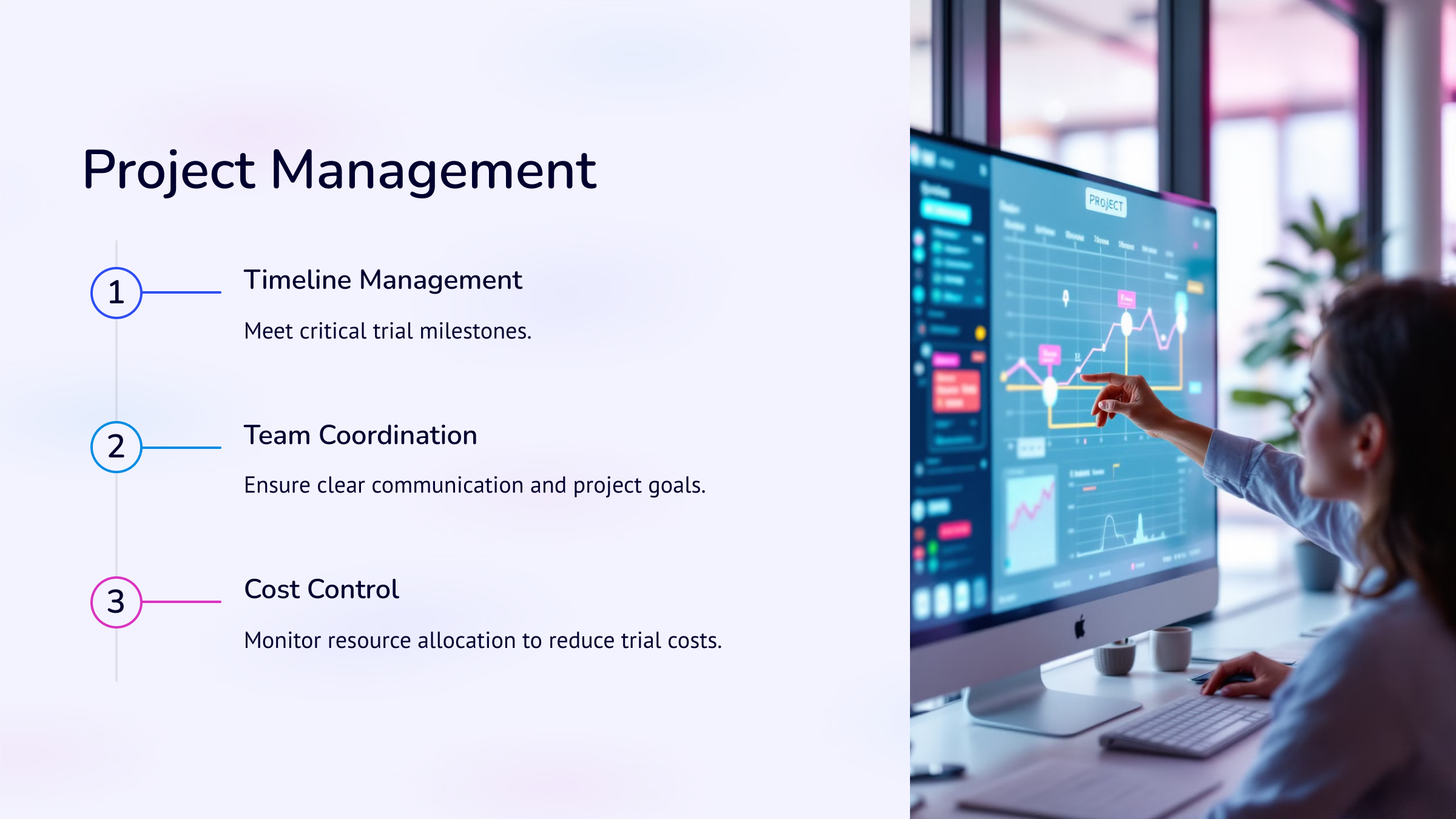
Project Managers oversee the entire clinical trial project, ensuring it stays on track in terms of budgeting, scheduling, and communication. Key responsibilities include:
- **Timeline management** to meet critical trial milestones.
- **Team coordination** to ensure clear communication and project goals.
- **Cost control** by monitoring resource allocation, ultimately reducing trial costs.
### 3. Clinical Research Manager (CRM) 🧑💼
The CRM supervises CRAs, creating strategic plans and directing resources. Their tasks include:
- Managing **resource allocation** and overseeing trial teams.
- Ensuring **successful execution** of project goals in line with regulatory standards.
### 4. Project Lead (PL) or Program Lead for Multiple Indications 🌐
Project Leads are responsible for overseeing one or more clinical trial programs. They:
- Develop and guide the **clinical development strategy**.
- Execute the vision and objectives for multiple indications within a clinical program.
### 5. Data Manager (DM) 📈
Data Managers handle the management of data collected during trials. They ensure that data is:
- **Accurate and reliable**, ready for analysis and interpretation.
- Properly prepared, stored, and documented for easy accessibility by statisticians and researchers.
### 6. Statistician/Biostatistician (STAT) 📉
Statisticians play a crucial role in analyzing data from clinical trials to determine safety and efficacy. Their responsibilities include:
- Designing **statistical models** and data analysis plans.
- **Interpreting results** to assess trial outcomes, providing insights into the treatment’s effectiveness.
### 7. Medical Writer (MW) ✍️
Medical Writers are responsible for documenting trial processes, results, and other scientific findings. They:
- Prepare **protocols, informed consent forms, and reports**.
- Ensure **clear, accurate communication** in regulatory submissions and publications.

### 8. Principal Investigator (PI) 👨⚕️
The PI, typically a physician or scientist, oversees the clinical trial and is responsible for:
- Conducting trials in line with **ethical and medical standards**.
- Recruiting and managing participants while ensuring protocol compliance.
### 9. Clinical Research Coordinator (CRC) 📋
CRCs support the PI by managing day-to-day trial operations. Their duties include:
- Screening and obtaining **informed consent** from participants.
- **Collecting and maintaining data** to support accurate record-keeping.
### 10. Institutional Review Board (IRB) 🌐
The IRB ensures trials uphold ethical standards by:
- Reviewing protocols to protect **participant rights and safety**.
- Monitoring trial progress and approving any protocol changes.
### 11. Quality Assurance (QA) Specialist ✅
QA Specialists conduct regular audits to maintain quality management. Their responsibilities include:
- Ensuring that all processes meet **regulatory standards**.
- Identifying and mitigating potential **quality issues** throughout the trial.

### 12. Regulatory Affairs Specialist 📜
These specialists are responsible for managing all regulatory documentation, ensuring that trials meet legal requirements. Their tasks include:
- Submitting necessary documents to **regulatory agencies**.
- Ensuring the trial complies with **international and local regulations**.
### 13. Patient Recruiter 🗣️
Patient Recruiters focus on identifying and enrolling suitable trial participants. They:
- Provide **trial information** and explain participation requirements.
- Handle the **consent process**, ensuring participants are fully informed.
### 14. Pharmacovigilance Specialist 🛡️
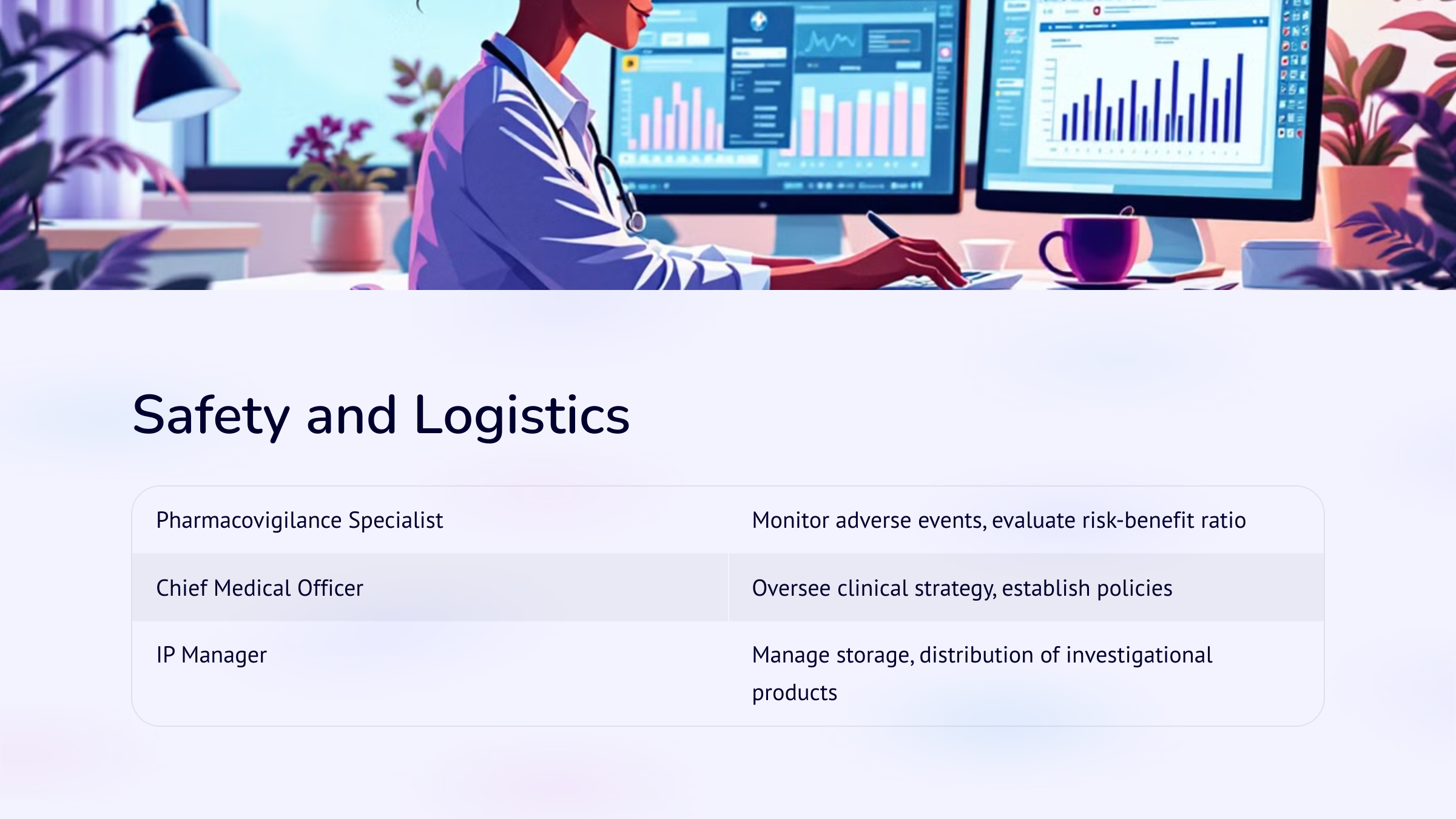
Pharmacovigilance Specialists manage safety data during trials and post-marketing, focusing on:
- **Monitoring adverse events** and reporting them.
- Evaluating the **risk-benefit ratio** to ensure patient safety.
### 15. Chief Medical Officer (CMO) 🏅
The CMO, a top-ranking medical executive, oversees clinical development strategy, particularly the medical aspects of trials. Their responsibilities include:
- **Establishing clinical policies and protocols**.
- Guiding trial design and ensuring the safety and efficacy of trial processes.
### 16. Investigational Product (IP) Manager 🚚
IP Managers handle the logistics of investigational products. Their tasks involve:
- Managing the **storage, distribution, and tracking** of investigational drugs or devices.
- Ensuring regulatory compliance with **accountability checks**.
## 🤝 Collaboration for Clinical Trial Success
Each role plays a unique part in ensuring clinical trials meet high standards for safety, ethics, and accuracy. Collaboration among these roles is essential for successful trial execution:
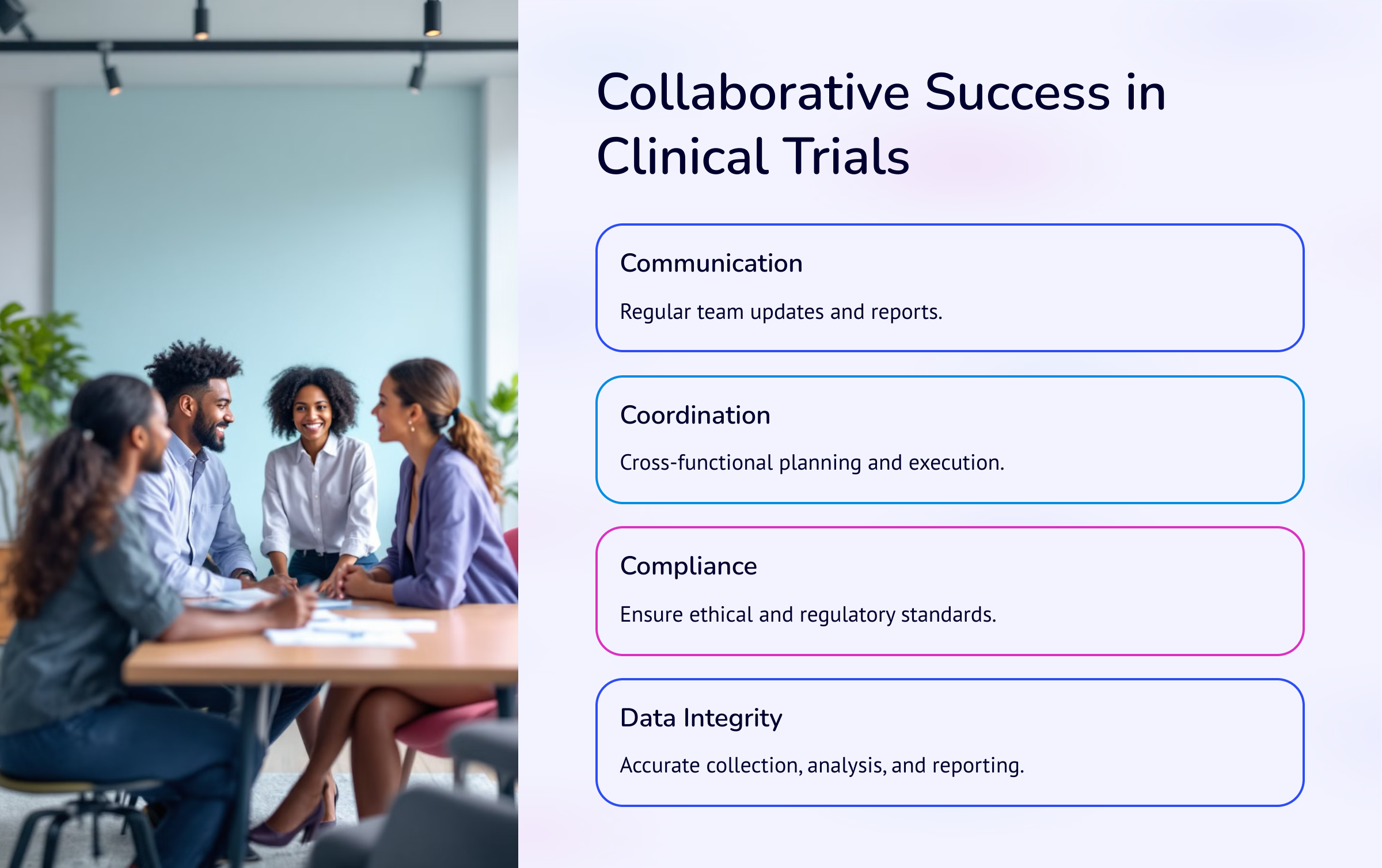
1. **Clear Communication Channels**: Regular team updates and reports allow each role to stay informed and respond quickly to issues.
2. **Cross-Functional Coordination**: By working together, teams ensure that protocol development, data management, and participant safety are thoroughly planned and executed.
3. **Ethical and Regulatory Compliance**: CRAs, QA specialists, and IRBs collaborate to ensure adherence to ethical and regulatory standards.
4. **Data Integrity and Analysis**: Data managers, statisticians, and medical writers work together to ensure trial results are accurately collected, analyzed, and reported.
## 🏁 Conclusion: Advancing Medical Knowledge through Clinical Trials
Clinical trials are a complex blend of scientific expertise and rigorous processes, where every role contributes to the trial’s success. Understanding the diverse roles involved in these trials and their collaborative efforts highlights the importance of teamwork in advancing medical research. Through these efforts, the medical field continues to grow, bringing safer, more effective treatments to patients worldwide.
## ❓ Q&A Section
Q1: Who is responsible for ensuring patient safety in clinical trials?
A1: The PI holds primary responsibility, with support from CRAs, ethics committees, and pharmacovigilance specialists.
Q2: How do IRBs uphold clinical trial ethics?
A2: IRBs review protocols and monitor trial progress to ensure that participant rights, safety, and well-being are protected.
Q3: Why are data managers essential in clinical trials?
A3: They ensure the accuracy and reliability of data collected during trials, supporting proper analysis and interpretation of trial results.
Q4: What is the role of a CRA in a clinical trial?
A4: CRAs monitor trial sites to ensure compliance with regulations and protocols, ensuring data integrity and participant safety.
Q5: How do patient recruiters support clinical trials?
A5: They locate and enroll suitable participants, providing essential trial information and managing the consent process.