
# Clinical Trials in the Digital Age: Exploring Online Transformation
## 🌐 Clinical Trials Meet the Digital World
In recent years, **clinical trials** have increasingly shifted to online platforms, transforming how medical research is conducted. This shift is driven by technological advancements, patient convenience, and the need for more efficient, decentralized research methods. Digital tools and platforms have allowed clinical trials to reach more participants, gather data remotely, and streamline the research process. This article delves into the changes brought by online clinical trials, the benefits, and the challenges involved.

## 💻 The Rise of Online Clinical Trials
### 1. The Shift from Traditional to Digital Trials 📲
Traditionally, clinical trials required participants to visit specific sites for check-ins, monitoring, and treatments. Today, **digital clinical trials** leverage online platforms, mobile devices, and wearable technology to collect data remotely. Key components of online clinical trials include:
- **Telemedicine and Video Consultations**: Medical assessments and consultations are conducted through secure video calls, reducing the need for in-person visits.
- **Remote Data Collection**: Wearable devices, like fitness trackers and health monitoring tools, collect real-time data on patients' vital signs, physical activity, and more.
- **eConsent Processes**: Participants can review trial details and provide consent online, streamlining recruitment and onboarding processes.
### 2. Benefits of Online Clinical Trials 🌍
The digital transformation of clinical trials brings significant advantages, including:
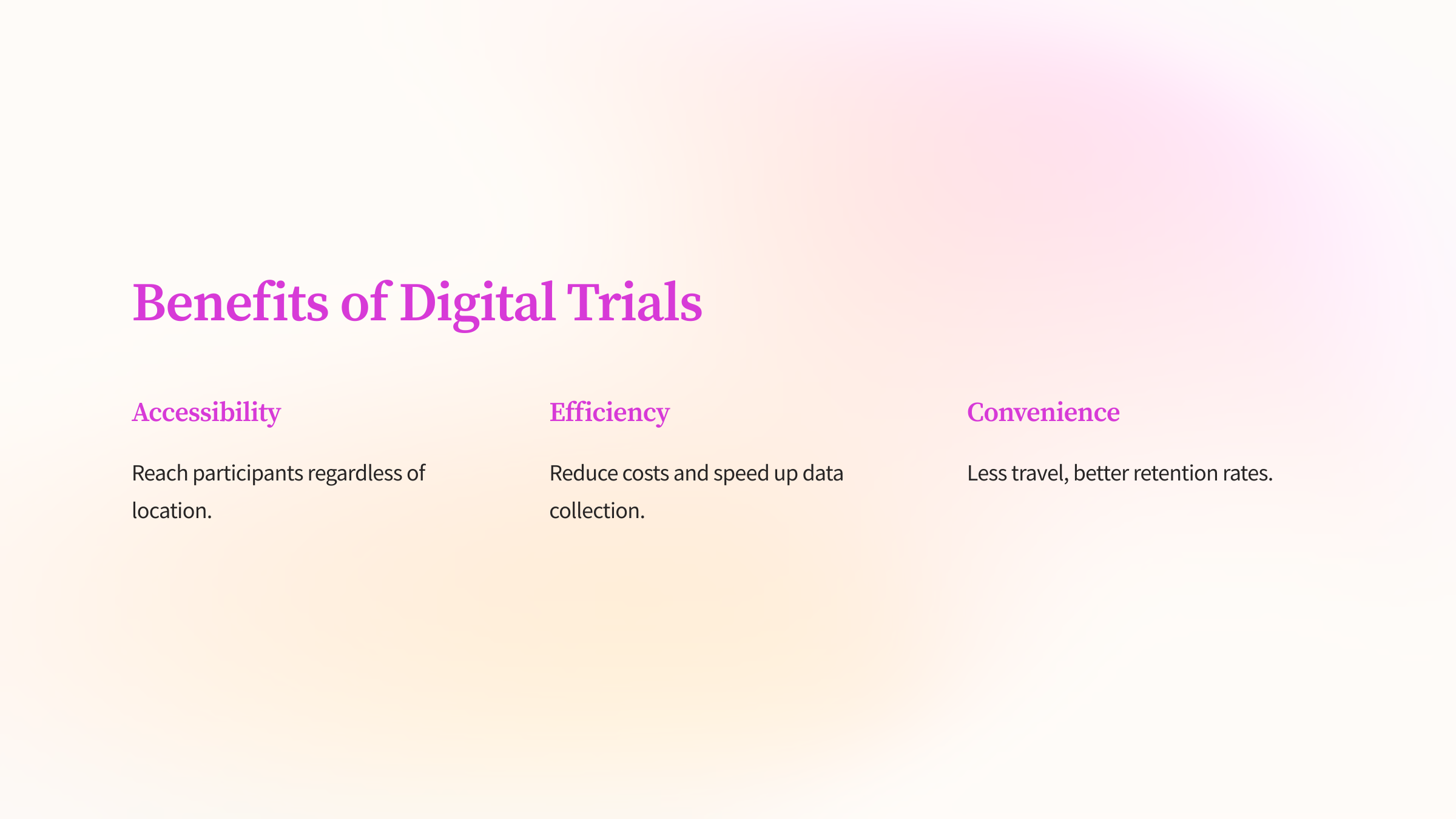
- **Increased Accessibility**: Online trials can reach participants regardless of their location, including individuals in remote or underserved areas, thus broadening the participant pool.
- **Reduced Burden on Participants**: Online platforms reduce travel time and make it easier for people with busy schedules to participate, leading to better retention rates.
- **Cost Efficiency**: Digital trials often require fewer physical resources and onsite staff, reducing the overall cost of running a clinical trial.
- **Faster Data Collection**: Real-time data collection through digital devices means researchers can access patient information instantly, speeding up the trial process.

## 🚧 Challenges and Considerations in Online Clinical Trials
### 1. Data Privacy and Security 🔒
- **Sensitive Health Data**: Online clinical trials require strict security measures to protect sensitive health data. Ensuring data privacy is essential for maintaining participant trust.
- **Regulatory Compliance**: Different regions have distinct regulations governing health data collection, storage, and transfer. Trials must comply with standards like HIPAA in the US or GDPR in the EU to avoid legal complications.
### 2. Technological Accessibility and Digital Literacy 📱
- **Access to Technology**: Not all participants have access to smartphones, high-speed internet, or wearable devices, which can exclude some demographics.
- **Digital Literacy**: Participants must have a certain level of comfort with digital tools, which may be a barrier for older populations or those less familiar with technology.
### 3. Data Integrity and Consistency 🔍
- **Variable Data Quality**: Digital devices may produce varying quality of data depending on the user’s compliance, device calibration, and environmental factors.
- **Maintaining Protocol Consistency**: Ensuring that participants adhere to trial protocols without regular, in-person supervision can be challenging, impacting data consistency and reliability.
### 4. Engagement and Retention 📊
- **Participant Motivation**: Online trials must keep participants engaged over potentially long study periods. Lack of face-to-face interaction may reduce participants’ sense of commitment, affecting retention rates.
- **Incentives and Feedback**: Providing timely feedback and incentives can help maintain engagement. Regular updates about trial progress and personal health insights can also increase motivation.

## 🔬 Case Studies: Success Stories of Online Clinical Trials
### 1. COVID-19 Vaccine Trials 💉
During the COVID-19 pandemic, clinical trials for vaccines leveraged online platforms for recruitment, monitoring, and follow-up, allowing studies to proceed quickly while ensuring participant safety through remote protocols.
### 2. Remote Cancer Treatment Studies 🎗️
Several cancer studies now use digital tools to monitor patients receiving treatments at home. Remote monitoring devices have allowed researchers to track side effects and treatment efficacy in real-time, reducing the burden on patients while still collecting valuable data.
### 3. Mental Health Treatment Trials 🧠
Clinical trials for mental health conditions, such as anxiety and depression, have successfully used digital tools to monitor participants' symptoms through online surveys, mobile apps, and wearable devices. These methods improve data collection on mental health patterns in a less intrusive manner.
## 💡 The Future of Online Clinical Trials
Online clinical trials represent a significant advancement in medical research, increasing accessibility, efficiency, and patient convenience. However, this new approach also presents challenges, especially regarding data privacy, technology access, and data consistency. As technology continues to improve, we can expect further integration of digital tools in clinical trials, potentially revolutionizing how we approach medical research and treatment development.
For online clinical trials to reach their full potential, the healthcare industry must address these challenges and continue to develop secure, inclusive, and effective digital solutions. By doing so, clinical trials can become more representative, efficient, and adaptable to the demands of modern medicine.
Q&A Section
Q1: What are the main benefits of online clinical trials for participants?
A1: Participants benefit from increased accessibility, reduced travel, and flexible participation, allowing more people to engage in clinical research conveniently.
Q2: Are online clinical trials as reliable as traditional ones?
A2: With proper protocols and robust technology, online clinical trials can produce reliable results. However, ensuring data consistency and participant compliance is key.
Q3: What challenges do researchers face in online clinical trials?
A3: Researchers face challenges like data privacy, technological access for participants, maintaining engagement, and ensuring data quality across diverse digital devices.
Q4: How do researchers ensure participant privacy in online clinical trials?
A4: Researchers employ encryption, secure data storage, and regulatory compliance measures, such as HIPAA and GDPR, to protect participant privacy.
Q5: How can digital tools improve data collection in clinical trials?
A5: Digital tools provide real-time, continuous data collection, allowing researchers to monitor participant health more closely and respond quickly to any changes.