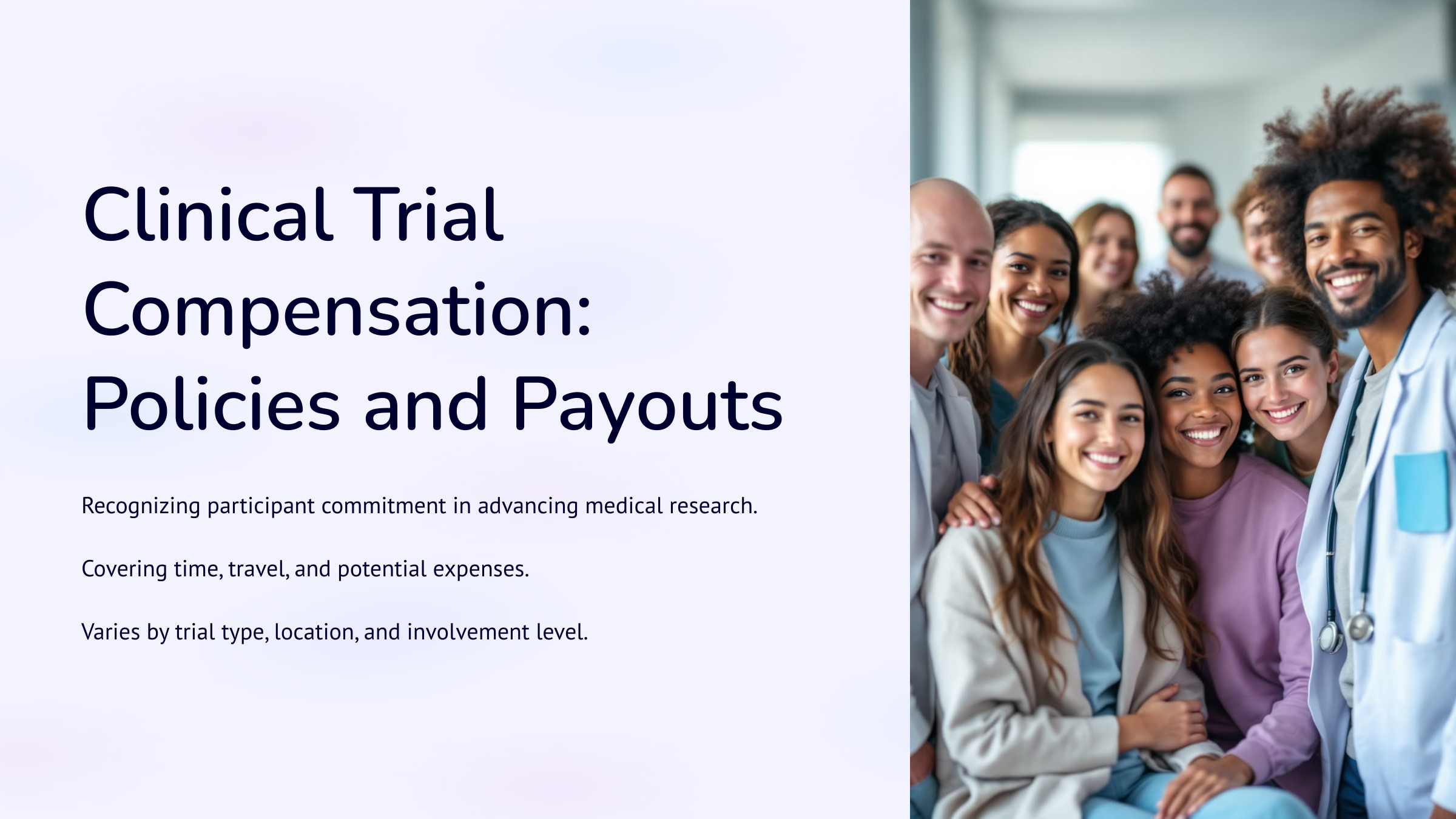
💸 Understanding Clinical Trial Participant Compensation
Participating in **clinical trials** is a critical contribution to advancing medical research, often requiring participants’ time, effort, and in some cases, travel. To recognize this commitment, **participant compensation** is provided, covering time, travel, and potential expenses incurred due to participation. Compensation varies by trial type, location, and involvement level, and may include additional support for meals, accommodation, or travel. This article outlines the structure of clinical trial compensation and the steps to receive it.
📑 Main Section: Key Elements of Clinical Trial Participant Compensation
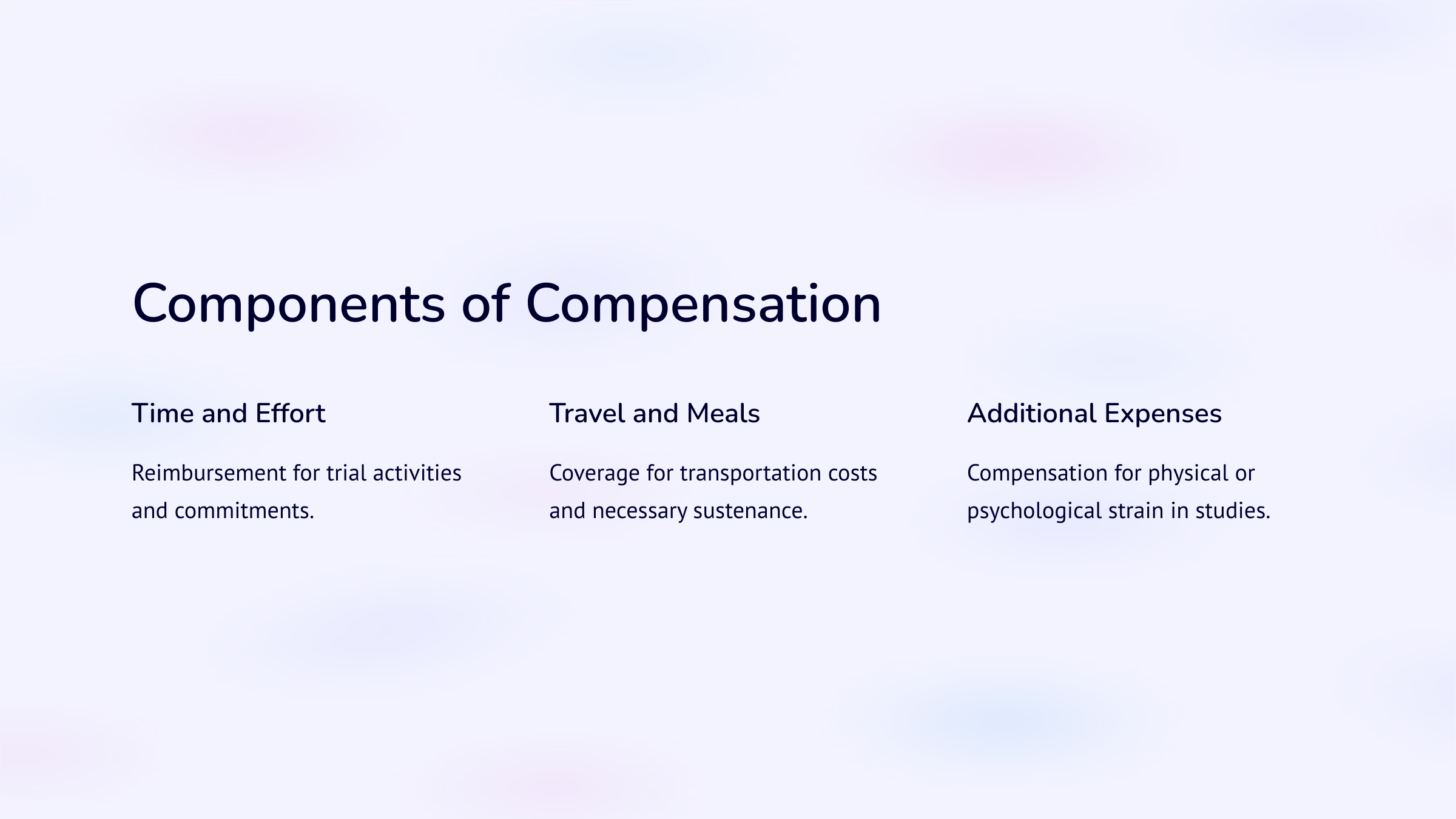
1. Components of Clinical Trial Participant Compensation
Compensation is structured to cover more than just time; it also accounts for various expenses related to clinical trial participation.
- Time and Effort Reimbursement: Participants are compensated based on the time and effort dedicated to trial activities such as screenings, check-ins, medication adherence, and follow-ups.
- Travel and Meals: Many trials reimburse participants for travel expenses to and from trial sites. For longer trials, compensation may include meals or even accommodation if frequent or prolonged visits are required.
- Other Expense Coverage: Depending on the trial, additional compensation may be provided to address the physical or psychological strain participants experience, particularly for high-risk studies.
2. Determining Compensation Amounts and Policies 💰
The amount and method of compensation vary based on the nature of the clinical trial and specific policies.
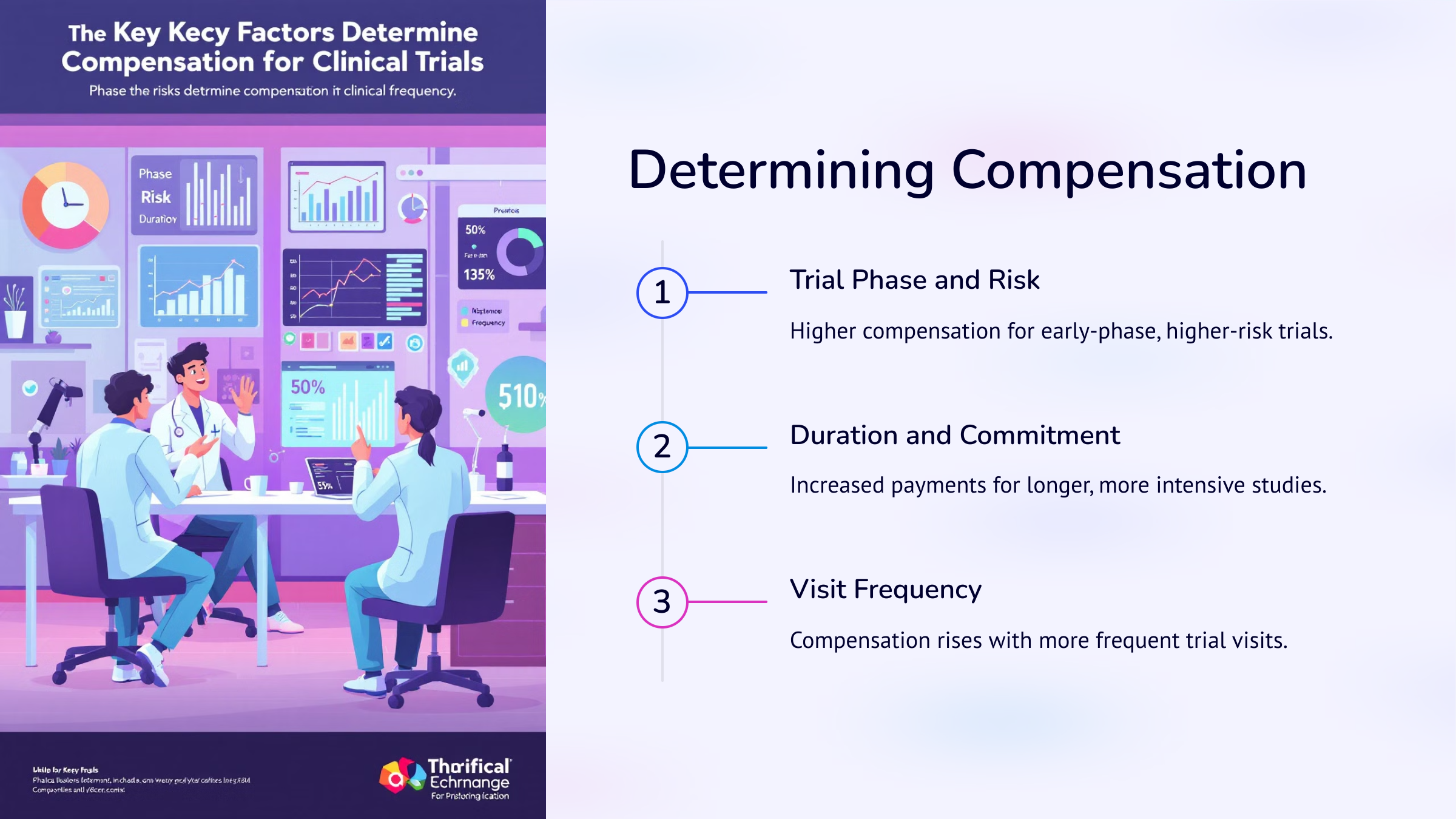
- Trial Phase and Risk Level: Compensation is often higher in early-phase (Phase 1 and Phase 2) trials, which may carry greater risks as the drug or treatment is still in exploratory stages.
- Duration and Time Commitment: Longer trials that require frequent visits or extensive time commitments generally offer higher compensation to account for the increased burden on participants.
- Visit Frequency: Some trials require multiple visits over an extended period, with compensation increasing accordingly to cover time and associated costs.
3. Steps to Receive Clinical Trial Compensation 📝
To receive compensation, participants must follow specific steps and meet eligibility requirements. Here’s a general outline of the process:
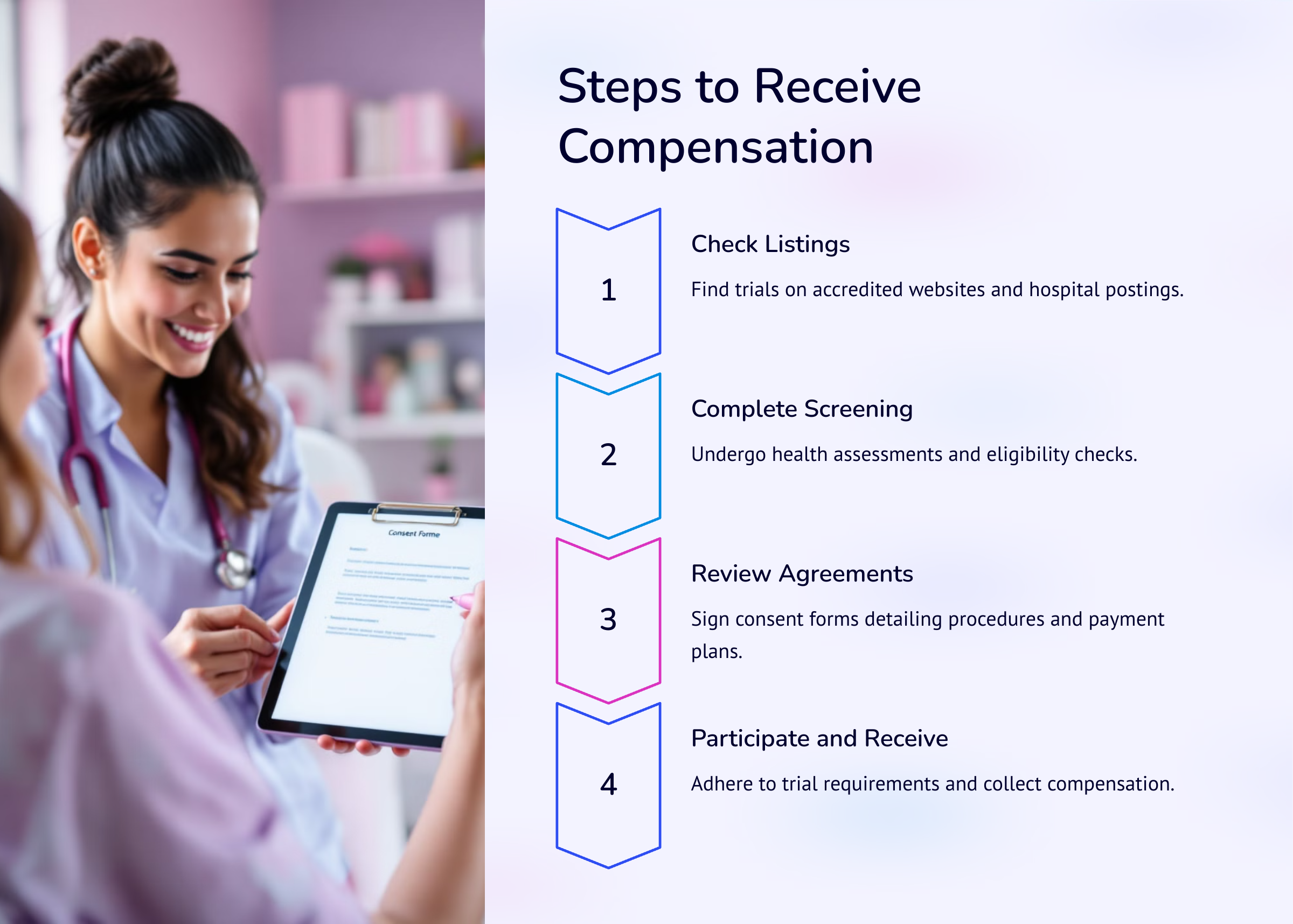
- Check Clinical Trial Listings: Accredited clinical trial websites and hospital postings provide trial opportunities with clear details on eligibility and compensation.
- Complete Screening and Eligibility Requirements: Those interested must undergo a screening process to confirm eligibility, which often includes health assessments and review of medical history.
- Review Consent and Compensation Agreements: Before participation, each volunteer signs a consent form detailing the study’s procedures and the compensation plan, including how and when payments will be distributed.
- Participate in Trial Activities: Adherence to scheduled visits and procedures is essential. Compensation is often conditional upon the participant’s compliance with study requirements.
- Receive Payment: Compensation is typically provided after completing the trial. For longer studies, payments may be made periodically or upon completion of certain milestones.
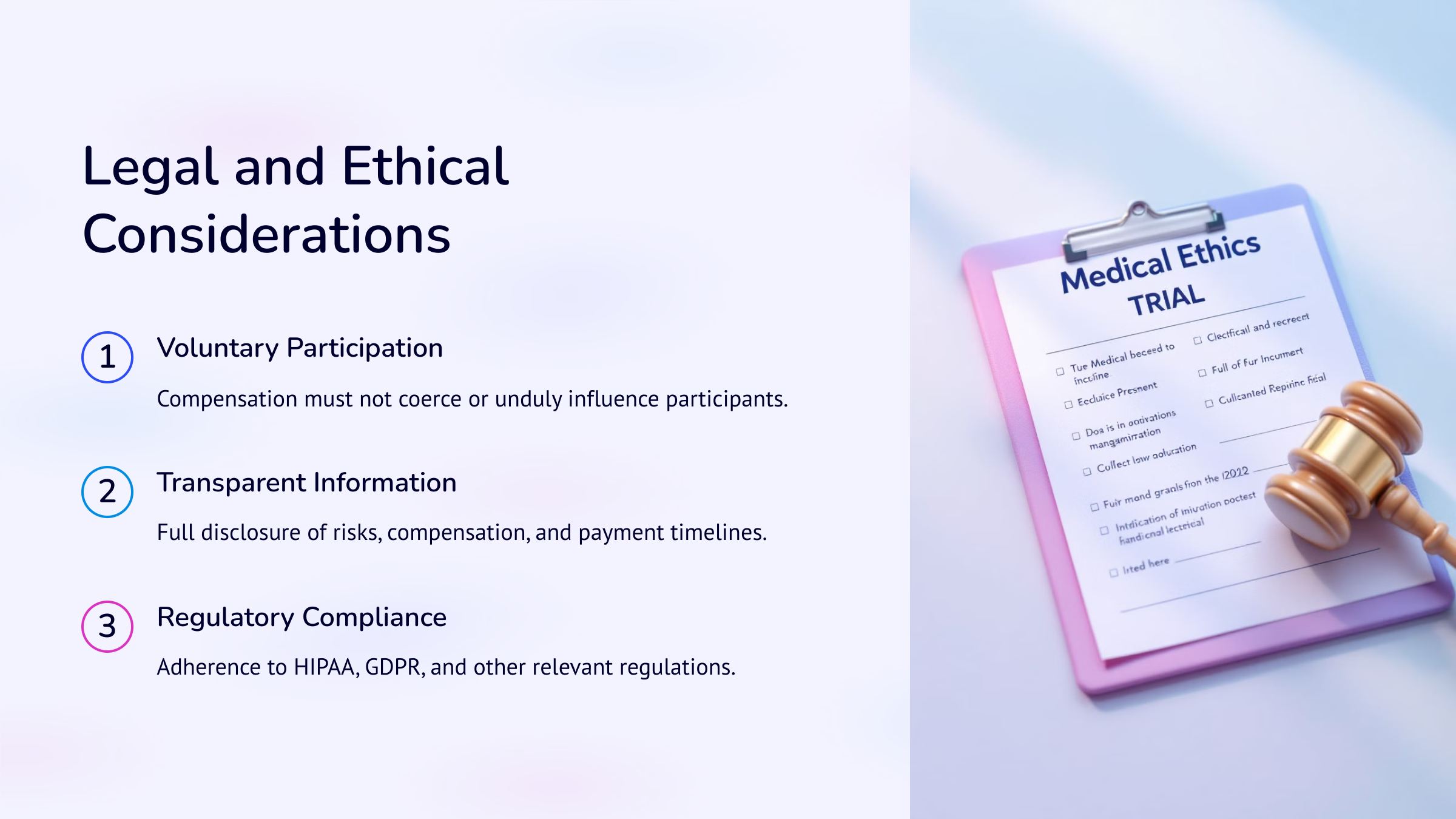
4. Legal and Ethical Considerations for Participant Compensation ⚖️
Compensation in clinical trials is carefully regulated to ensure ethical standards and protect participants. Offering excessive compensation could pressure participants into ignoring potential risks, which is why strict legal and ethical policies are in place.
- Voluntary Participation: Compensation must not be so high that it entices participants to overlook possible risks. Emphasis on voluntary participation is key to upholding ethical research standards.
- Transparent Information: Participants are entitled to complete information about trial risks, compensation amounts, and payment timelines before signing consent.
- Regulatory Compliance: Clinical trials must comply with regional and international regulations, such as HIPAA in the United States or GDPR in Europe, to ensure fair and legal compensation practices.
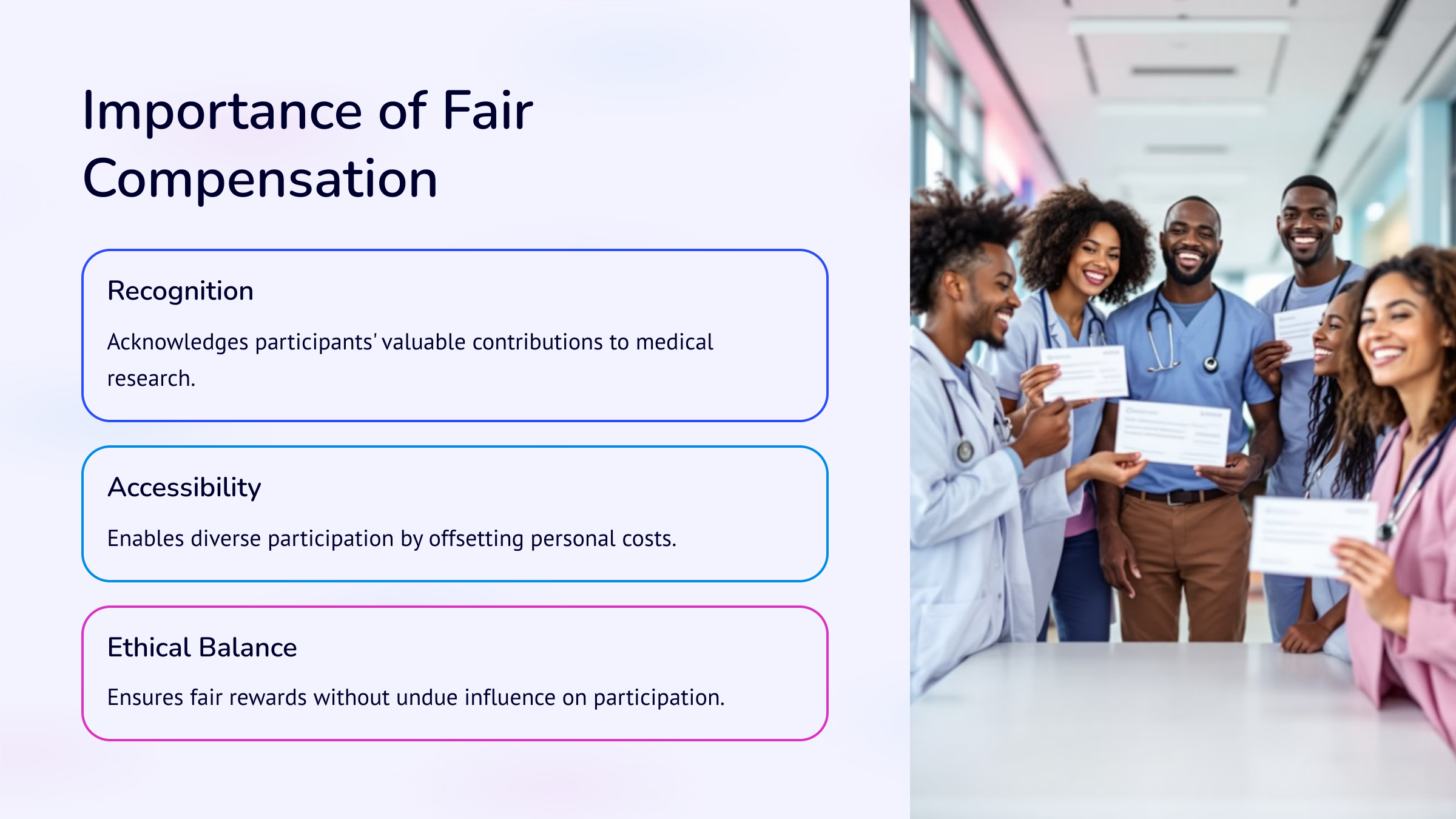
✅ The Importance of Compensation in Clinical Trials
Clinical trial compensation is essential in recognizing participants' commitment and offsetting the costs of participation. Compensation is designed to ensure participants are acknowledged for their time and contributions without unduly influencing their decision to participate. When considering clinical trial participation, it’s important to review the compensation agreement and understand any risks involved fully. Transparent and fair compensation policies allow clinical trials to advance medical research ethically and effectively.
❓ Q&A Section
Q1: How much can I expect to earn as a clinical trial participant?
A1: Compensation varies widely based on the trial's risk level, length, and requirements. Short trials may offer under $100, while longer or higher-risk trials can pay several thousand dollars.
Q2: How is clinical trial compensation distributed?
A2: Payments are typically made at the end of the trial, though longer studies may offer interim payments at regular intervals.
Q3: Are all clinical trial participants compensated?
A3: While most trials offer compensation, some non-profit or government-funded studies may have limited funds and may not provide compensation, especially in low-risk trials.
Q4: Does participation in multiple trials impact my health?
A4: Repeated participation can stress the body and increase health risks, so it’s advised to participate in clinical trials responsibly and with medical oversight.
Q5: Is clinical trial compensation taxable?
A5: In many regions, small compensation amounts are not taxed. However, large sums may be subject to taxes, so it’s wise to consult local tax laws.