
🩺 What is Decentralized Clinical Data?
With advancements in healthcare and data integration, decentralized clinical data has garnered significant attention. This approach involves collecting and utilizing medical data from various locations—hospitals, research labs, and even homes—moving away from traditional centralized systems toward a secure, distributed data management method. Decentralized clinical data enhances efficiency in medical research and patient care, while also improving personalized healthcare services.
This article explores the concept and benefits of decentralized clinical data, its use cases, and potential for future development.
📊 Key Concepts and Applications of Decentralized Clinical Data

1. Definition and Characteristics of Decentralized Clinical Data
- Definition: Decentralized clinical data refers to medical data collected across various devices and locations, connected and managed via networks rather than being stored in a single, centralized location.
- Key Characteristics:
- Data Security: By collecting data from multiple locations, the risk of a single point of failure is minimized. Even if one hospital or institution's security is breached, the risk to the entire data set is distributed.
- Personalized Data Collection: Data can be collected from patients in their daily lives, allowing for more tailored healthcare insights.
- Expanded Research and Analysis: With data points spread across different environments, researchers can leverage more diverse data for robust analysis.
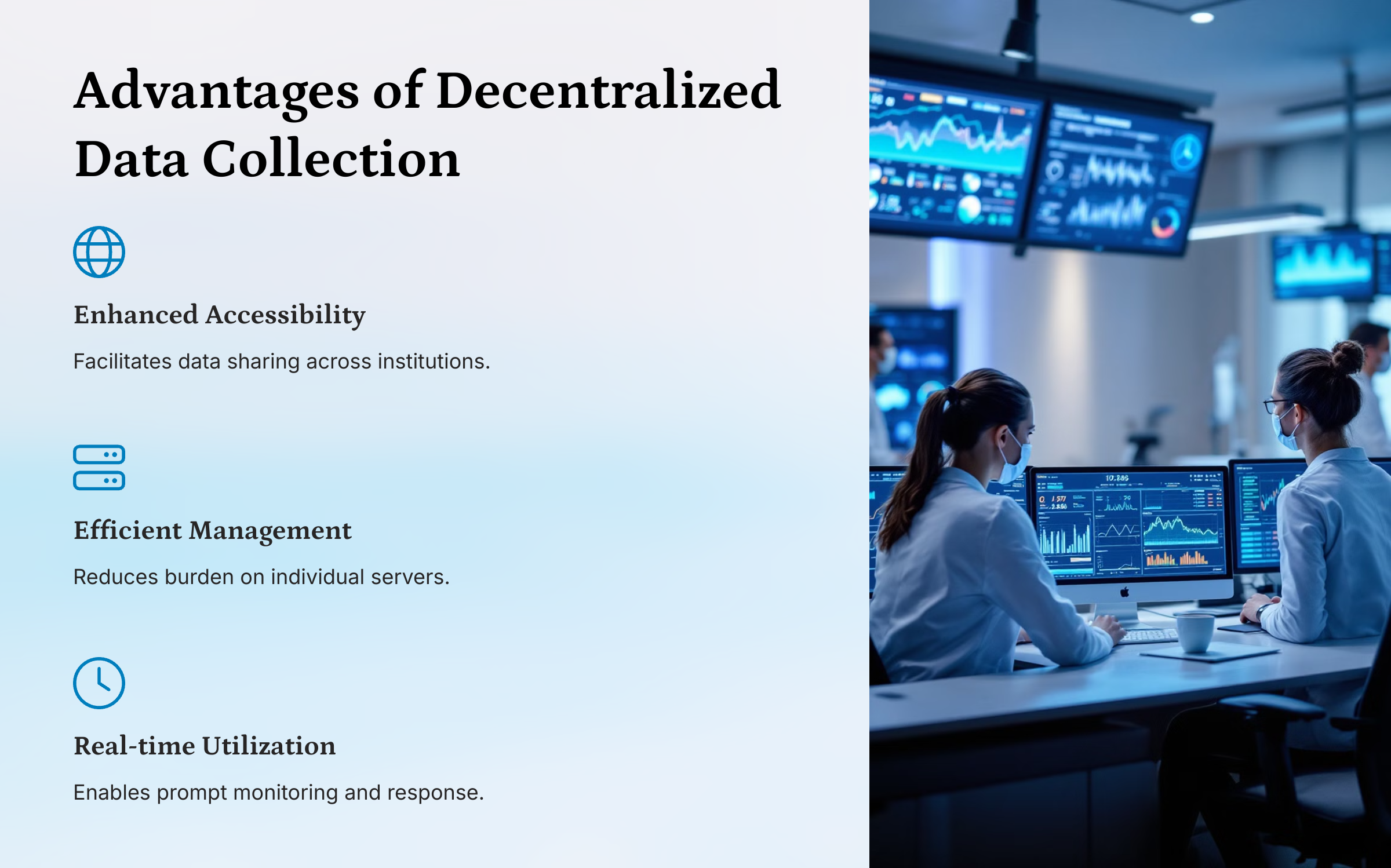
2. Advantages of Decentralized Data Collection 🌍
- Enhanced Data Accessibility: Eliminating reliance on a centralized database facilitates data sharing and access across institutions.
- Efficient Data Management: Distributed data management reduces the burden on individual servers and enhances data security for each site.
- Real-time Data Utilization: Mobile devices, wearable gadgets, and other technologies enable real-time data collection and analysis, allowing healthcare providers to monitor and respond to patient status promptly.
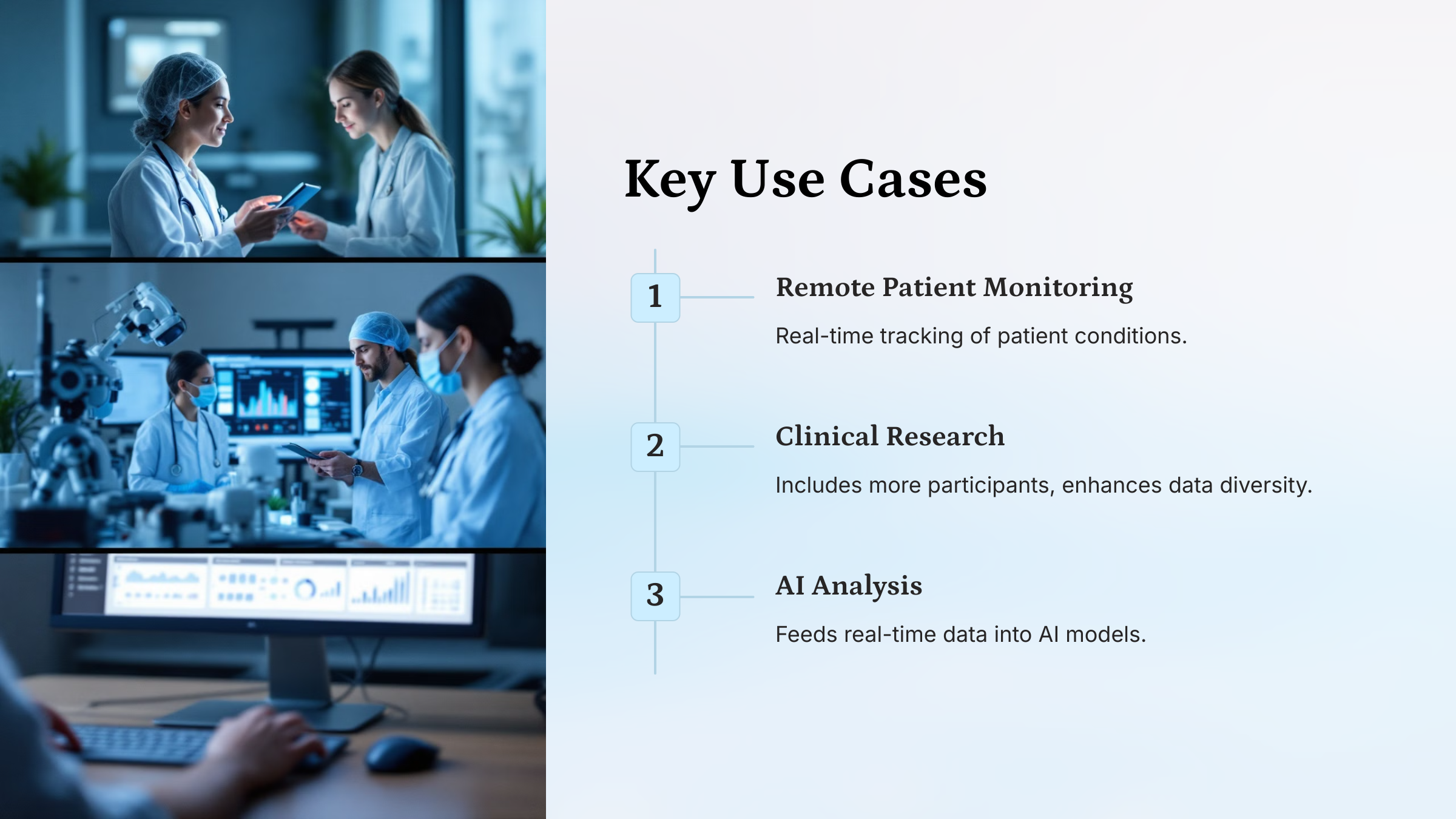
3. Key Use Cases for Decentralized Clinical Data
- Remote Patient Monitoring: Patients’ conditions can be monitored in real-time without hospital visits, enabling timely responses when needed. For example, a heart rate monitor can continuously track a cardiac patient’s data and alert medical staff if anomalies are detected.
- Clinical Research: Decentralized data allows clinical research to include more participants and variables, reducing research costs and enhancing the diversity and reliability of data.
- AI Analysis: Real-time data collected from multiple locations can feed into AI models for disease prediction and diagnostic support.

4. Considerations for Building Decentralized Clinical Data Systems
- Security and Privacy: As decentralized data is connected via networks, risks of hacking and data breaches exist. Data encryption, authentication protocols, and secure data transmission methods must be implemented.
- Data Standardization: To analyze data from various institutions and devices, data must be standardized. A system that can harmonize and interpret diverse data formats is essential.
- Regulatory and Legal Compliance: Data collection and use must comply with each country’s healthcare regulations and policies. As medical data is highly sensitive, failure to adhere to regulations can lead to legal issues.

💡 Conclusion: The Future Potential of Decentralized Clinical Data
Decentralized clinical data represents an innovative approach that could greatly impact the future of healthcare. By connecting and analyzing diverse data in real time, it enables personalized treatments and more efficient healthcare services. Integrating with AI is expected to allow for more refined and varied analyses, offering a transformative opportunity to enhance healthcare quality.
Healthcare institutions and research organizations should actively leverage the advantages of decentralized clinical data to build safer and more effective care systems.
❓ Q&A Section
- Q1: How does decentralized clinical data differ from centralized data?
- A1: Centralized data is stored and managed in a single location, while decentralized data is collected and managed across various locations, improving both security and accessibility.
- Q2: Where is decentralized clinical data primarily collected?
- A2: It is collected from diverse sources, including hospitals, research labs, wearable devices, and smartphone apps used by patients.
- Q3: How is security managed in decentralized data?
- A3: Security measures include encrypting data, restricting access, backing up data periodically, and strengthening security protocols.
- Q4: How can decentralized data integrate with medical AI?
- A4: AI can identify patterns in diverse data, supporting predictions about patient status and aiding diagnosis.
- Q5: What is needed to utilize decentralized clinical data?
- A5: Standardizing data, complying with legal regulations, and establishing a robust data security system are essential steps.
